
What mobilizes, energizes, and guides the work you find here at Heart-Head-Hands: Everyday Living for Justice?
Here, I share my commitment statement, which is always emergent, in draft form, and charting a direction for striving and a course to live into.
Commitment statements can take many forms but need to address the question of what motivates a life’s work. I find it helpful to link commitments with land/water acknowledgements, because both remind us of what’s meant to be invisible when living in systemic oppression. Both ask to be lived out and made actionable: not as statements that are written and left behind but as living articulations of everyday actions (both immediate and long-term).
As my close friend, co-author, and confidant Rasha Diab has taught me: these aren’t statements we write; instead, these are statements that write us. Here’s where I am at the moment—in an ongoing process of learning and unlearning.
With love,
Beth (she/her)
Beth’s Commitment Statement and Land Acknowledgements (Revised June 2026)
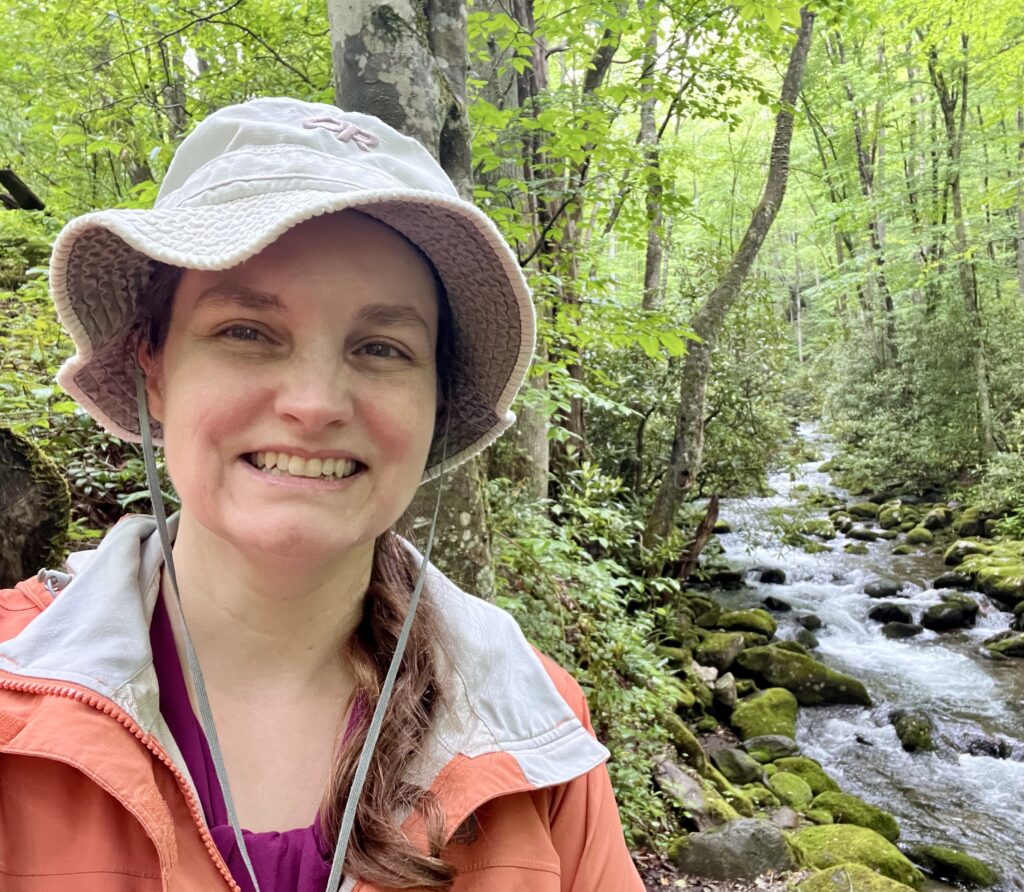
I write from my home on Cherokee Land in Western North Carolina (WNC), Asheville, in the Appalachian Mountains. This unceded land is the ancestral homeland of the Cherokee people, including the nearby Eastern Band of the Cherokee Indians of the Qualla Boundary.
I grew up in East Tennessee and then lived in Georgia, Wisconsin, and Washington, D.C. before committing to Western North Carolina, so I am shaped by and indebted to many relations—peoples, places, and local communities. When I chose to return to the mountains of southern Appalachia (TN-NC) in 2024, I acted on the desire, longing, and love for deep roots.
Rootedness, for me, includes ongoing learning and teaching about history, language, place, relations, relationship-building, and accountability. It means reckoning more with where I am and how I got here and unsettling what’s meant to be settled. It includes honoring Indigenous sovereignty and making many concrete efforts toward collective liberation and Land Back.
I believe it’s important to start by acknowledging Indigenous peoples’ land/water rights. Acknowledgement ties the history of place with the continuing violence we see in everyday life of settler-colonialism, white supremacy, anti-Black racism, heteropatriarchy, capitalism, imperialism, ableism, ecocide, and interlocking systems of oppression. I act from these acknowledgements, which I name here in an ongoing effort to counter epistemic injustice.
Naming more: Black people, Indigenous people, and people of color continue to be dehumanized and denied human rights, including the right to self-determination. Everyday violence defines our schools, workplaces, and community settings, carrying on a legacy of more than 400 years of enslavement in this land and the genocidal program of U.S. settler-colonialism. Ongoing structural and everyday violence undermines the humanity of us all.
Writing within the legacies of white supremacy and conditioned whiteness, I grieve. I rage. I commit to truth-telling, ancestral healing, and a relational ethic. I invest in repair. I reach toward right relationship. While recognizing continued harm—that I do harm—I strive to lessen harm and to learn and unlearn and to be more accountable. With deep gratitude and accountability to the Land, People, and Universe, I strive to live toward justice.
In this life’s work, I have a lot of gratitude for and owe acknowledgement to colleagues working with and through the CCCC Caucuses, among many organizers, colleagues, and scholar-activists who continue to influence me and my relational understandings. To name a few relational influences, I am especially grateful to Rasha Diab, Candace Epps-Robertson, Tina Pippin, Elaine Richardson, and Jacqueline Jones Royster. Today, I continue to learn from and need to acknowledge deeply BIPOC feminist and womanist educators and activists, including Gloria Anzaldúa, adrienne maree brown, Paulo Freire, bell hooks, Robin Wall Kimmerer, Audre Lorde, Mia Mingus, Loretta Ross, Alice Walker, Alice Wong, and the Combahee River Collective, among many others.
This striving is motivated by deep love—love of nature, love of beloveds, love of a vision of right relationship, love of writing and of words and of what humans create.
As I attempt to discern what’s called of me at this moment, I am feeling-thinking (as everyday practice) about my role and responsibilities as a white cisgender U.S.-based educator, coach, facilitator, writer, and researcher:
As an educator and writer, I commit myself—both in this moment and for the long haul—to struggling against systems of oppression and toward equity, justice, and the true valuing of all humans, non-human animals, and the earth. I commit both to redressing harms and to situating myself and my work within larger webs of relations, honoring ancestors and elders in the work for justice.
As a white cisgender woman, I commit to never stop learning and unlearning, to never stop recognizing my own complicity and harm done, and to never stop naming and struggling against injustice. I commit to doing self-work, to working with and alongside others, and to working for institutional and systemic change.
With deep breaths—BREATHE—I am full-body IN this work …
Dreaming, imagining, and fiercely enacting love as a verb.
Open, humble, ready, and willing—wrapped in a blanket of support from the Divine, from community, and from partnerships—that make so much possible.
* * * * *
How These Commitments Guide Heart-Head-Hands: Everyday Living for Justice
So, how does this statement shape the work you find here—through the spaces and business of Heart-Head-Hands: Everyday Living for Justice?
Commitments are both the starting point and navigation system. I truly believe that we can’t just think our way out of the incredible injustices, dehumanization, violence, and wrongdoing that characterize everyday life. We must feel and act, too. We need our heart, head, and hands for envisioning and enacting a more just world. We need deep commitments to justice and an attitude of “try-try again” when striving to live out these commitments—both in everyday moments and for the long haul.
Together, heart, head, and hands help me work within the many tensions of both/and. While striving against systemic oppression and racial capitalism, I am still living and acting within these systems. Therefore, I work to reduce harm, while recognizing that I do harm. I stay with the mess of these dialectics and ask the following questions, among many others:
1. What’s Guiding the Work You Find Here?
The offerings of Heart-Head-Hands center embodied and lived experiences and stretch across facets of everyday life. Writing communities are truly co-created and deeply relational, joyfully redefining, and unapologetically feminist. Our spaces welcome all sorts of writing and recognize that we are always already navigating minefields of harm from schooling and from life.
Acting on these and other recognitions, and toward making commitments actionable, I work across all three spheres of interaction: intrapersonal (self-work), interpersonal (work-with-others), and institutional (work-within-institutions). I commit to asking regularly: Where is my energy going? How am I acting on my commitments? How am I falling short? Where am I not engaged, not doing the work required? What needs to shift and change?
As I hold these and other questions, I use the “strong yes” as a compass. Guided by commitments, embodied knowledges, and accountability relationships, striving toward justice involves a lot of ongoing self-work and reaching toward integrity.
2. How Am I Striving Toward Accountability?
Too often, we are trained to value what’s comfortable and easy and to avoid conflict and, therefore, accountability. Instead, I value showing up imperfectly, committed to striving. I make mistakes and learn in real-time. I show up as a learner/un-learner in public, which is oftentimes scary and always humbling. I repeat Docta E’s mantra “do it scared” on a regular basis.
Accountability and support structures are essential. These take different shapes in my life over time, including coaching, counseling, close friendships, and co-authoring groups as well as academic review and mentoring relationships. I continue to value pod relationship-building for accountability work. Pods are premised on strengthening reciprocal relationships and embracing vulnerability, including unlearning whiteness and white supremacy and the harm we do through these systems. This relational work involves regular check-ins around what more needs unlearning and when and how to reach toward repair.
I am always learning more about speaking directly and truthfully, breaking patterns of perfectionism and people-pleasing, and welcoming uncertainty and conflict. And I commit (again) to never stop learning and unlearning. I do this from a place of self-compassion, staying with calls to show up steadily, with stamina and staying power.
3. How Do I Relate to Money and Resources?
It is messy for me to be in business within capitalism: a system of exploitation and oppression. I resonate strongly with the language of “participating in capitalism under duress,” which Monique Liston and UBUNTU Research & Evaluation use to name how businesses can function within oppression. For me, being under duress means always being conflicted, knowing there is no straightforward or single action, no way that exonerates complicity.
This means that I recognize the need to relate differently not only with money but with all resources, to resist capitalist goals, to unlearn internalized classism, to honor the earth, and to reach toward repair of historical, persistent, and inter-generational harm. As an individual and as an organization, I am again embracing both/and.
Both: I recognize my need for a sustaining income, as life within capitalism is incredibly precarious. Human rights, including rights to food, housing, and healthcare, are tied to work, and I need income to sustain myself and my family. And: I recognize the need to guard against hoarding and relate differently and creatively with money. This includes use of tithing, sliding scales, payment plans, and registration options that re-route access and other resources.
Part of how I act on my commitments is through recurring donations to individuals, creative projects, and organizations aligned with these commitments, including Beloved Asheville, Democracy Now!, Firestorm Collective, Museum of the Cherokee People, Narrow Ridge Earth Literacy Center, NDN Collective LandBack Campaign, Pisgah Legal Services, Southerners on New Ground, and Southside Community Farm. Part of how I act is answering requests for immediate interventions (like bail relief and mutual aid). And part is through asking whenever I feel satisfied with what I am doing: “what else?”
I am wary of neat solutions that quantify redistribution and stop there. Too often, they seem like having things figured out: an allure of whiteness. So, instead I choose a messier route—one that involves questioning all resources, including what has come to me historically, what is in my hands to heal, and what is for me to release. This means that I question how money and value systems are functioning through generations, in and beyond my business, and within institutions where I am affiliated. Particularly, in my relationship with higher education (as an academic and former professor), this work involves careful attention to who’s listened to/for and who’s not, who’s credited and whose contributions are hidden, whose time is valued and why, and much more.
In total, being in the mess of money matters means seeking more ethical practices—and not only with income but also with ideas, time, access, and resources. Therefore, I continue to ask:
- What brings me closer to alignment with social, racial, and environmental justice?
- What is involved in striving toward justice as an everyday life practice?
- Where am I investing myself, my energies, my resources? And why? And what needs to change?
My discernment practices continue—striving not alone but surrounded by support.

Learn More about Articulating and Acting on Commitments
These related blog posts offer additional reflections and resources for writing and living out commitment statements:
- “Commitment Statements: Questions and Answers Pointing Toward Action”
- “Writing a Commitment Statement”
- “Slowing Down to Clarify Commitments”
- “Breaking Commitments and Recommitting through Mindful Reflection”
- “Reflection, Retreat, and Recommitment: Learning from the Winter Woods”
- “Care as an Amulet Against Cruelty”
- “How Do We Build More Accountable Lives?”
- “New Article: ‘Because We’re Going to Mess Up’: Practices for Accountability—Not a Piecemeal Approach”

