

I’m grateful to Danielle De La Mare of the Self-Compassionate Professor for inviting me to do an interview that’s become “Episode 19: Career Discernment with Dr. Beth Godbee.” This interview relates both my career discernment story and how I understand career discernment as a lifelong, ongoing process of finding and following the “strong yes.” Here’s what Danielle says about the interview: “Former professor, Dr. Beth Godbee, joins me for the first episode of Season 2! ... Read more ...
microaggressions
When Speaking Up at the Holidays Means “Complaining” and Being the Killjoy

Last year, during the holidays, I blew up (yelling, cursing, and storming off), and the experience highlighted for me the need to embrace criticisms that I’m “too sensitive,” “too critical,” and “too complaining.” On the day I blew up, I was so overwhelmed, disconnected, and worn down by systemic oppression that my body couldn’t take it. I held myself together until I couldn’t hold it in anymore: then, I released a tidal wave of rage. I’m still processing, but I’m ... Read more ...
3 Reasons to Participate in the 40-Day Practice on Strengthening Emotional Literacies to Counter White Fragility
Starting on November 22nd and running for the final 40 days of 2019, I’m offering the “40-Day Practice: Strengthening Emotional Literacies to Counter White Fragility.” Every time I offer this practice (this will be my third and second online), I get a lot of questions, including what this work involves, why it asks for a commitment of 40 days, and why it focuses on emotions. Though I hope the course description answers many of these questions—and I’m happy to answer ... Read more ...
Responding to Microaggressions

How do we respond to microaggressions, or those everyday and commonplace actions that convey bias, invalidate people, and reinforce structural oppression? We know from research and personal accounts that microaggressions occur all-too-frequently across contexts—workplaces, family gatherings, and community settings. From hurtful words to dismissive gestures, microaggressions do more than communicate harm. They have wide-reaching impact, for they deny access, constrain ... Read more ...
Responding to Injustice: Why Settling the Nervous System and Slowing Response Times Matter

Recently, I’ve had several moments of witnessing first-hand the links between settling the body (that is, settling the nervous system) and showing up more mindfully, more open, and more like the “best self” that’s needed when striving for social and racial justice. In contrast, moments when my nervous system is “keyed up” (from exhaustion, from unresolved tension, from disappointment, and more), I find myself having knee-jerk reactions and being short with ... Read more ...
My New Year’s Resolution = Self-Love for Countering White Fragility

The days leading up to this new year have been bumpy for me, pushing me to recommit to radical self-love. I’ve had some really tough conversations with family around everyday injustice, and these conversations have reminded me why we need a deep well of emotional literacies for confronting complicity. In the midst of one of these tough conversations—in which I was speaking aloud my embodied responses to white supremacy—I shared that my heart was throbbing, and I ... Read more ...
Naming Trauma as Trauma
As part of my research on epistemic injustice, I’ve been thinking about the power of naming: the power of having the linguistic resources to identify, describe, and call out varied experiences, especially experiences of injustice. Systemic oppression works in a way that denies the ability to name experiences of wrongdoing. When experiences are named, they can be acknowledged and addressed. To me, this is part of the power of the word microaggressions: the word allows ... Read more ...
A Barrage of Microaggressions
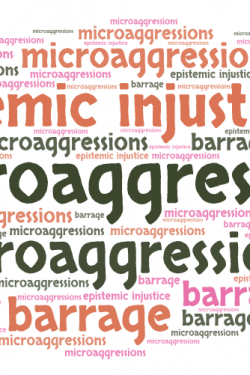
Some years ago I began recording everyday microaggressions toward learning to recognize racism, which is so often coded and which whiteness has taught me not to see. This recording project aimed at building a repository of common microaggressions to teach with and practice interventions using Augusto Boal’s theatre of the oppressed. The project emerged from conversations with colleagues of color, who shared how often white colleagues failed to believe their experiences. ... Read more ...
Revealing the Cultural Patterns of Rape Culture
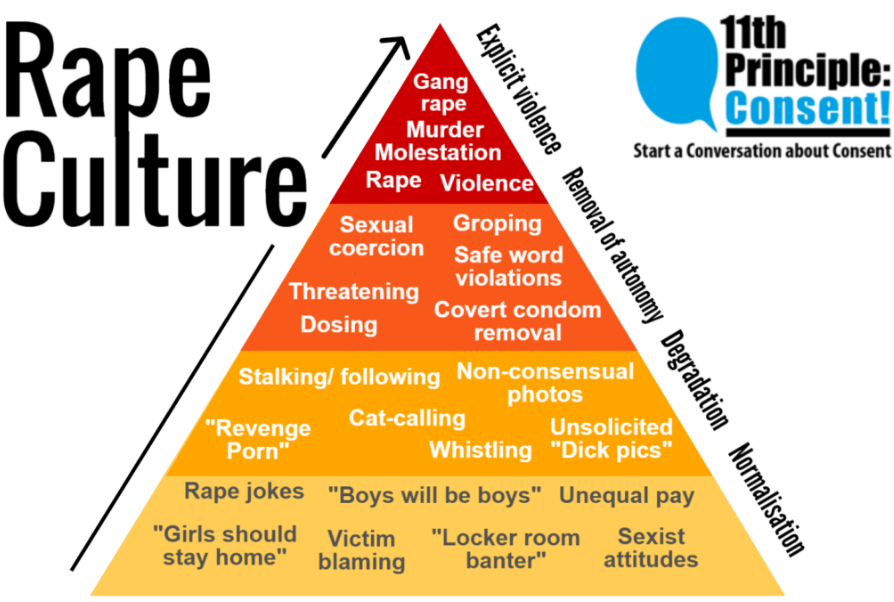
It’s been a few weeks since the #metoo hashtag prompted discussion about the widespread and systemic nature of sexual violence. As I’ve shared stories and listened to others’, I’ve been struck by frequent questioning: “Does ______ really count as sexual harassment or assault?” And that question has led me to consider the many moments of sexual intimidation that aren’t harassment or assault per se, but constitute violence and are part of rape culture nonetheless. Here ... Read more ...
Choosing to Tread Another Path

I’ve been spending a lot of time recently on paths. Established hiking trails and sidewalks, escalators and even rock crawls marked by arrows. And I’ve been especially appreciative for the healing that comes from this time walking—not only hiking, but standing, marching, experiencing the mobility associated with movement, strengthening and using my body, contemplating my embodied existence, and examining the various privileges and positionings associated with this ... Read more ...

