
I never thought I’d be involved in recipe creation because, for years, I didn’t think of myself as a cook. I loved to eat, but I hated the time involved in food preparation. As I grew more interested in replicating foods (especially ones I’d try in restaurants or remembered from youth), I found more motivation to experiment in the kitchen. And as I thought of cooking as experimentation—as art, as play, as creative self-care—I could see why others liked it. I began to imagine myself as someone who similarly played with food.
I’m learning to experience cooking as play, and as play, cooking helps me embrace a both/and approach to self-care. It’s both relaxing, restoring, and rejuvenating and doing what’s hard, boring, and “adulting.” It’s both giving my body the nutrition it needs and enjoying the foods I eat.
* * * * *
A few years ago, I consulted a naturopath (Dr. Sarah Axtell in Milwaukee), who helped me figure out my GI issues, taught me a lot about vegan eating, and accompanied me on a journey to heal my gut. She offered advice that has stuck with me, including the recommendation to make at least half of each meal veggies.
Even as a vegan, I struggle to meet this goal:
half of what I eat = vegetables.
Especially when traveling or eating out, it’s easy for meals to center around grains and beans, processed foods and sugars. Though I add spinach and other greens to smoothies, this is hardly half. And I regularly make a meal out of banana, chocolate, and peanut butter mash. Truly, I have to bring intention to eating more vegetables, and so I often plan meals starting with the veggies and building from there.
Luckily, I love roasted vegetables. Because I prefer to cook without recipes (with what’s on hand) and to cook simply (with less time investment), roasted vegetables are a great option. Just add salt, pepper, and oil, and pop them into the oven.

A lot of roasted vegetables—mushrooms, eggplant, and fennel (pictured here), as well as carrots, potatoes, and other root veggies—taste great together and with tahini sauce, so I’ve learned to make full meals of vegetables with tahini.
Add a simple salad like this one of tomatoes, cucumbers, and parsley (in roughly equal proportion), and it’s a full meal. A meal I hope will become leftovers, because I’ll happily eat this for days.
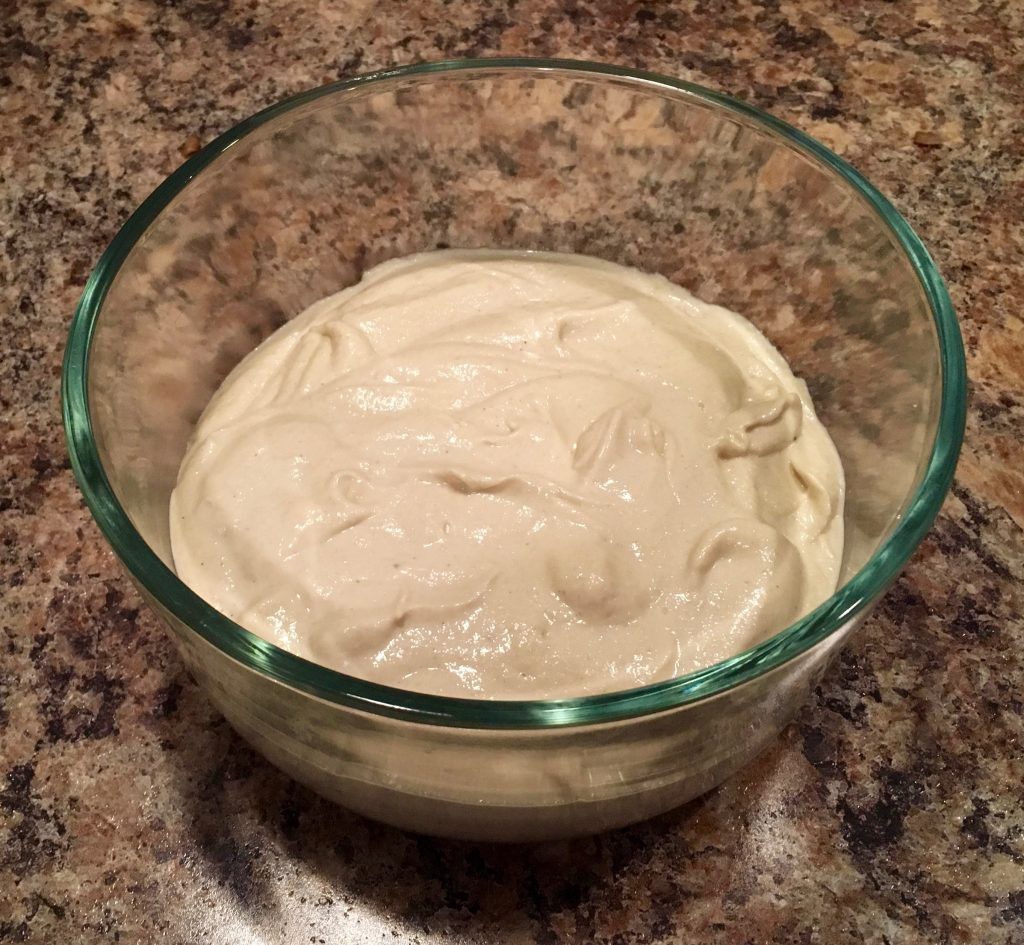
What holds this meal together is the tahini sauce, which can be made thicker like dip or thinner like dressing. It’s salty, sweet, and savory goodness. There are a lot of quick-and-simple tahini recipes online like this one from the Minimalist Baker and this one from Vegan Richa. This recipe combines what I most enjoy from these (garlic, lemon, and oil) and can be easily adapted with other spices (cumin being my favorite). Here’s the rough recipe.
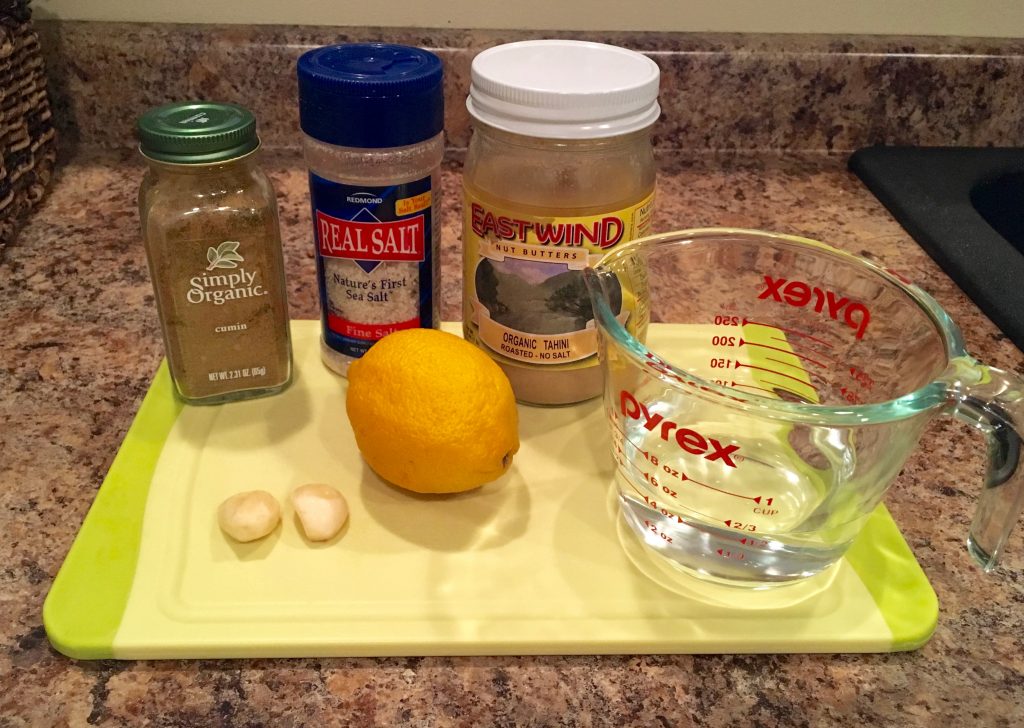
Ingredients:
All of these measurements are estimates, and I adapt them to taste and to the amount I’d like to make at a given time (easily halving or doubling the recipe):
- Tahini— ½ cup
- Water—½ cup
- Salt—1 teaspoon
- Garlic—2+ cloves
- Lemon juice—2 tablespoons to ¼ cup
- Extra virgin olive oil—varies substantially … I add this in while blending to taste, starting with 1-2 tablespoons and typically adding closer to ¼ cup.
Note that more water or oil can be added to thin the sauce, while less makes it thicker.
Optional Add-ins:
- Cumin, pepper, chili powder, or other spices. In the sauce pictured here, I’ve added ½ teaspoon of cumin, which gives it a kick.
Preparation Time:
- 10 minutes, which includes the time of gathering ingredients from cabinets, combining all ingredients, and blending.
Instructions:
- Put all ingredients into blender (I love my Vitamix because it can process full cloves of garlic), and blend until smooth, adding additional ingredients or more oil to taste.
—
This post is written by Beth Godbee for Heart-Head-Hands.com. For more posts like this one, you might try “Banana, Chocolate, and Peanut-Butter Mash: Changing My Relationship with Sugar and Rethinking Self-Care,” other vegan + gluten-free recipes, or the series of posts answering why I’m vegan. Please also consider following the blog via email. Thanks!


Attachment available until Oct 27, 2017 YUMMMMMM… We are what we eat! I am cooking up Red Bean Soup on this cool day.
Thanks of the inspiration Beth!!
Erin
Click on the image for sound 😉 Click to Download IMG_5806.MOV 26.5 MB
>
Thanks, Erin, and red bean soup sounds delicious! 🙂
👏🏻 the lunch looks yummy😊
Sent from my iPad
>
Now you’ve made me hungry! 🙂
I was certainly never into cooking either, until I was in a relationship with someone who loved to eat at restaurants nearly seven days a week. She was an adventurous eater, and introduced me to a variety of worldwide cuisines. Now, being a poor writing center director some 20 years ago, I figured that the only way I wouldn’t end up poor and destitute though eating out was learning how to cook myself. Learning to cook helped me to learn the principles of various cuisines around the world, and how the “work.” It was an eye-opener, for sure. When we think of food, we don’t really think that there is thought and thinking behind it. Take a look at Indian cuisine, for example. Most of the ingredients aren’t just about flavor, but also about how the body will react to the food being eaten. Ginger, for example, is used to aid digestion as is turmeric etc.
I’d write more, but my bus is here. 🙂
Thanks for your comments, Clint! And I so agree that there’s a lot to learn about food and not just about flavors and dishes, but also how foods interact with and can heal the body. The more I learn, the more I want to learn. 🙂 And do still you cook for yourself? Any favorite vegan dishes to recommend? 🙂
Yes, I do cook for myself. At least that stuck! 🙂 I think Indian vegetarian cuisine is the most easily adaptable to Vegan diets, quite honestly. With a lot of other cuisines (such as Thai, Japanese, etc.) you have a lot of “hidden” animal products. With Indian vegetarian cuisine one only need keep an eye out for ghee (clarified butter) and yogurt. There are occasional recipes that call for milk too, but they are rare. I’ve never had any complaints for people who eat the Vegan versions of the recipes. Even when I do make it with milk products (I’m not Vegan myself), I never use ghee, but just use butter instead, so I guess I’m cheating “authentic” anyway.
I’d highly recommend Neelam Batra’s book _The Indian Vegetarian: Flavors for the American Kitchen_. (https://www.goodreads.com/book/show/86770.The_Indian_Vegetarian) Most of the recipes are straight Vegan with the ones that contain milk-products easily fixed. The recipes are also adapted quite well for produce available in American markets, as well as being very conscious of the amount of oil going into dishes. Batra doesn’t talk that much about the ayurvedic effects of the spices, but you can look those up from other sources.
My second choice of cuisine that is more easily adapted to Veganism is, like your recipe Middle Eastern, but even then, I think the range of recipes that you’ll find in Indian cookery to be astounding, and they don’t get “samey.”
Hi again, Clint,
Thanks for the book recommendation. Do you know the blog Vegan Richa? It’s one of my favorites—with lots of traditional Indian foods made vegan.
I also feel a sort of struggle around this conversation, thinking about how cuisine (like spiritual practices and other knowledge systems) can be culturally appropriated. I’m wondering how to learn and value deep knowledge systems around food without taking them for my own (colonizing them). I hope that makes sense … a question I’ll keep sitting with and one that means playing with food requires an orientation to racial justice, just as all other parts of life. <3
Beth
Fair point, Beth. I wonder when appropriating food culture goes too far? I think there definitely is the danger of being a food tourist, which, in the Western tradition, is very much about colonization. I might add, as an extra layer of irony, that many of the popular dishes that we find in Indian restaurant menus would never be found in India itself. They are a product of British colonization and mostly originated in Britain. Hmm!
Hi Beth! Thought of you much today as i cooked some roasted veggies, pan fried tempeh, and made tahini sauce, all inspired by you, for Libby and my lunches for next two days! Thanks! Happy almost-Friday! Much love! Jos.
Jos, this sounds delicious! Yum: what good lunches for the next two days. 🙂 Looking forward to seeing you and Libby *soon*! Hugs, Beth