
As writers, we need support not only for our products—what we are creating—but also for our processes—the how, when, where, who, and why of writing.
This spring, Candace Epps-Robertson (of Full Circle Writing) and I have been offering a program that addresses these fuller needs and offers writing process support to postdoctoral fellows at the University of Texas MD Anderson Cancer Center.
Briana Mohan, Program Director in Research Education & Training, invited us to lead a series of workshops, small-group sessions, and one-with-one coaching to support postdoctoral fellows as writers. We have been lucky to be supporting and learning from postdocs working on a wide range of cancer research.
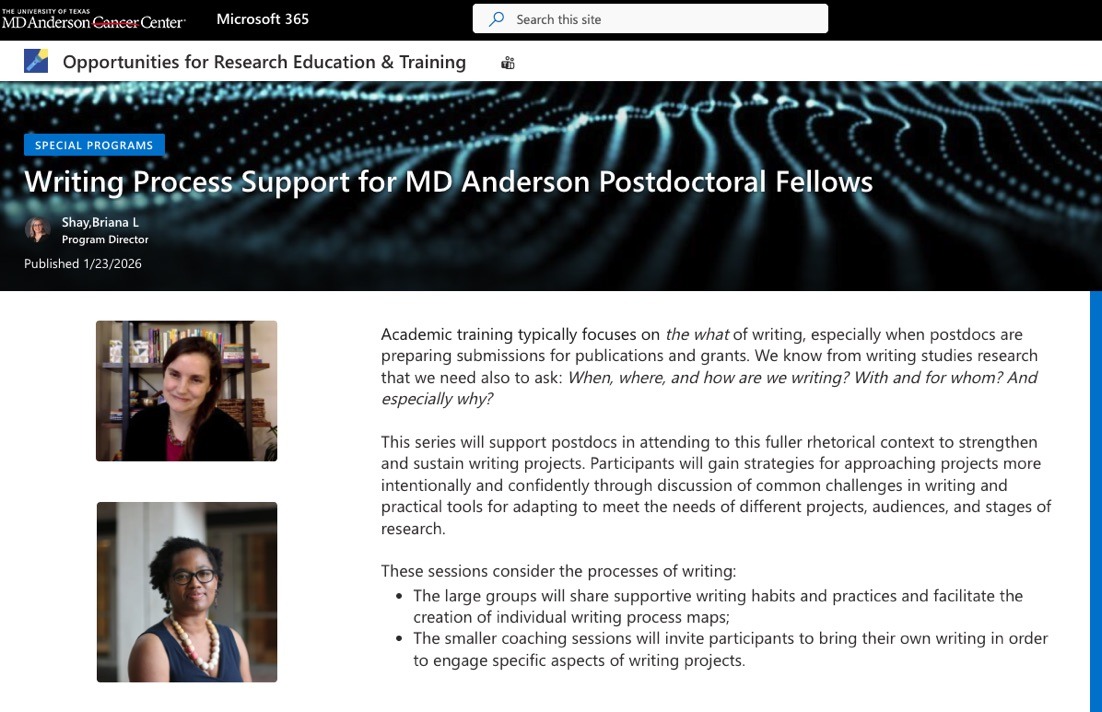
“Academic training typically focuses on the what of writing, especially when postdocs are preparing submissions for publications and grants. We know from writing studies research that we need also to ask: When, where, and how are we writing? With and for whom? And especially why?
This series will support postdocs in attending to this fuller rhetorical context to strengthen and sustain writing projects. Participants will gain strategies for approaching projects more intentionally and confidently through discussion of common challenges in writing and practical tools for adapting to meet the needs of different projects, audiences, and stages of research.
These sessions consider the processes of writing:
The large groups will share supportive writing habits and practices and facilitate the creation of individual writing process maps;
The smaller coaching sessions will invite participants to bring their own writing in order to engage specific aspects of writing projects.”
Supporting Postdoctoral Fellows as Writers
This writing support program has been invigorating in many ways, stretching me back to writing center work and forward to cross-disciplinary connections made possible by bridging far-reaching disciplines. I’ve been learning so much—from what inhibits or enhances gene expression to what conditions exacerbate health disparities and inequities.
The sequence of moving from large-group workshops to small-group conversations to one-with-one coaching has allowed for deepening relationships, and those relationships have made possible more vulnerable writing conversations and review of drafts. And I have loved collaborating with both Candace and Briana, excellent partners in asking what’s really needed and figuring out how to make it happen.
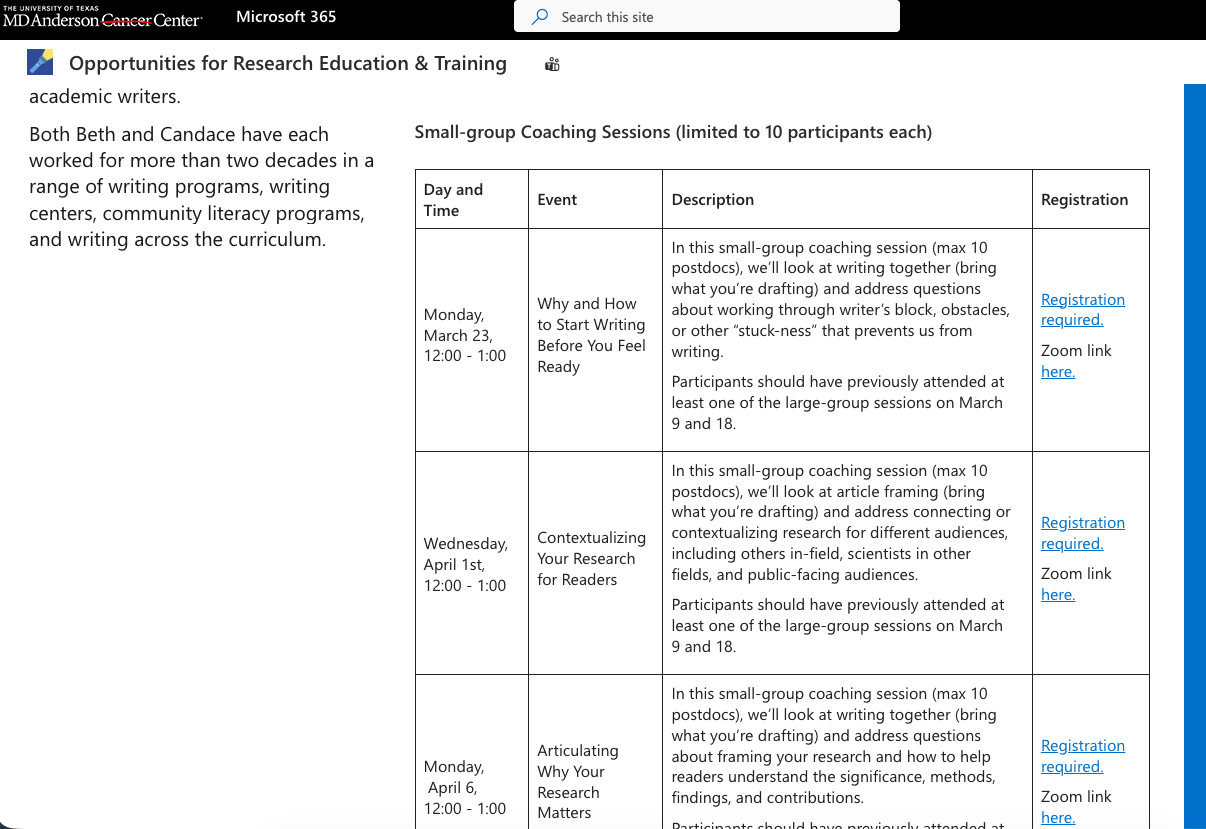
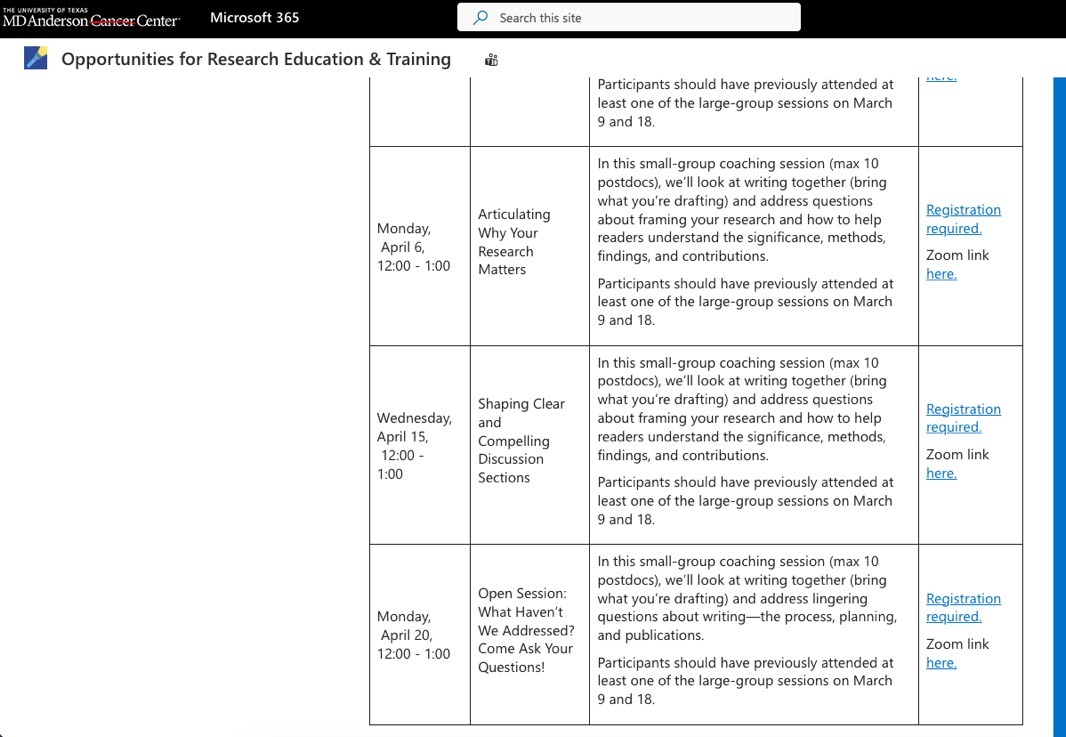
Throughout the program, writers have described what we also value: the importance of being able to talk about the writing process in order to prepare for future writing. Within the postdoctoral context, writers are learning what it means to write as part of a collaborative team, to imagine and shape one’s own research while partnering on others’ research, and to transfer one set of writing lessons to the next, sometimes-very-different writing context. It’s not surprising, then, that writers asked us for guidance on articulating their research interests, questions, commitments, and career trajectories. This experience clarified that writing support for postdoctoral fellows needs to provide support both for the writing happening now and for writing in and toward future careers.
One surprise for me involved how often postdoctoral fellows described reflective writing they do to help make sense of their research and workplace lives. Writers talked with us about journaling practices. Several writers described reflective writing to support transitional times—moving between projects or between labs. Several others described their processes for taking reading notes and memoing articles. Still others indicated an interest in beginning a contemplative writing process, asking for prompts they might use to step back and consider patterns—from offloading the intensity of work to analyzing data itself.
These conversations indicated to us that postdoctoral fellows take themselves seriously as writers. They reach for writing as an everyday practice. And they have an awareness that writing facilitates learning, builds understanding, and even helps with emotional processing.
Coaching Academic Writers
As writing coaches, Candace and I understand our role as supporting writers as they develop sustainable writing practices aligned with their professional priorities and aspirations. In turn, writers teach us about their commitments, questions, and writing challenges. This year’s writing process support program has been a fertile space for learning as participants shared stories and drafts, asked questions, and offered insights.
We have really appreciated working with UT MD Anderson Cancer Center and with both postdoctoral fellows and colleagues in Research Education & Training. And we would love to customize more programs like this for academic writers.
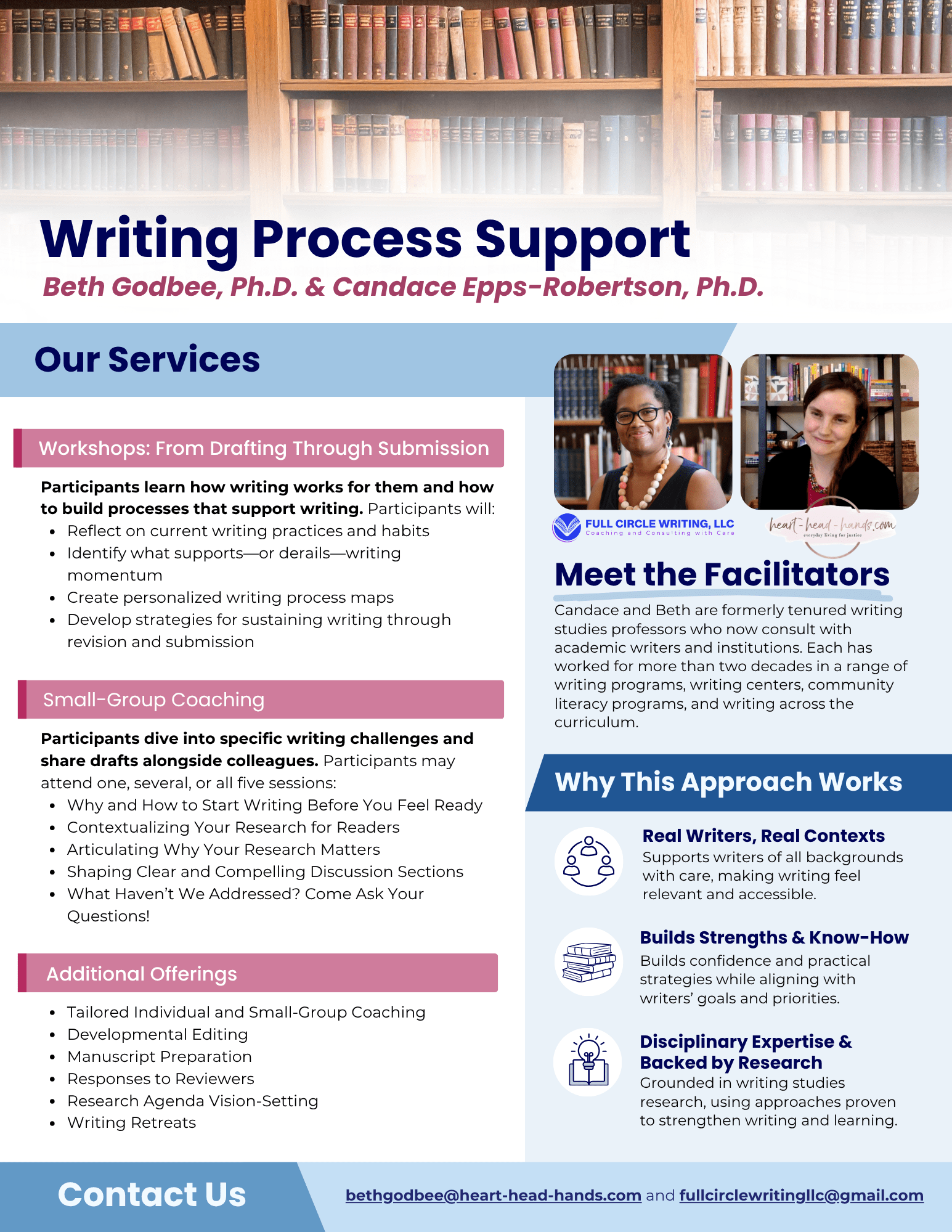
We are able to facilitate large- and small-group workshops, to train academics to become writing mentors and facilitators themselves, and to provide direct one-with-one coaching. As Briana Mohan, Program Director for Research Education & Training at UT MD Anderson, shared, “I chose to work with Beth and Candace because they are exceptional in their support, pedagogy, and guidance in helping people write for varied audiences, purposes, and genres.”
Reach out if you’re interested in customized writing support for your campus or organization. We are here to offer writing support.
—
This post is written by Beth Godbee, Ph.D. (she/her) for Heart-Head-Hands: Everyday Living for Justice. Subscribe to the email newsletter for regular updates, including for upcoming writing groups, retreats, and coaching.
To learn more about tailored writing support, check out these related blog posts:
- “Writing Support for Your Campus? The Case of the UNT CLASS Write Program”
- “Mentoring Writers Well? 3 Assumptions about Mentoring Writing”
- “How Mentors Can Support Writers and Counter Epistemic Injustice”
- “Planning Writing Projects: Workshop Handouts and Resources”
- “Q&A with Candace Epps-Robertson, Ph.D.: Introducing Full Circle Writing, LLC”
- “Q&A with Candace Epps-Robertson: On Seasons of Life, Writing, and Career”
And I want to acknowledge again my incredible collaborators Candace Epps-Robertson, PhD. and Briana Mohan. Both are dedicated educators, attentive writers, and important advocates for academic writers.


Leave a Reply