
Recently, I’ve had several moments of witnessing first-hand the links between settling the body (that is, settling the nervous system) and showing up more mindfully, more open, and more like the “best self” that’s needed when striving for social and racial justice.
In contrast, moments when my nervous system is “keyed up” (from exhaustion, from unresolved tension, from disappointment, and more), I find myself having knee-jerk reactions and being short with others—manifesting a version of myself that I don’t like.
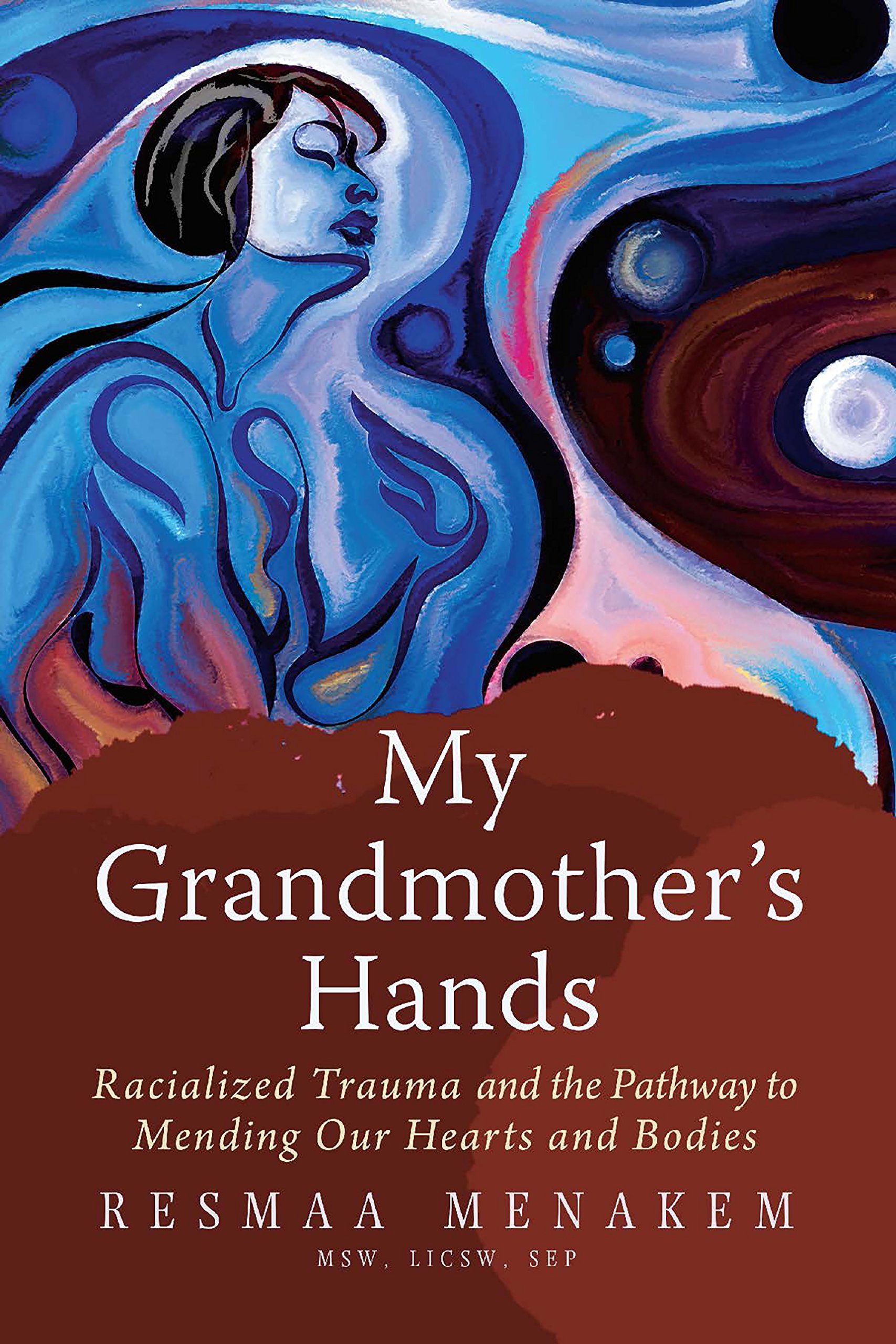 I’m coming to see the contrast of my calm-body and keyed-up selves more and more since working through Resmaa Menakem’s book My Grandmother’s Hands: Racialized Trauma and the Pathway to Mending Our Hearts and Bodies (2017, Central Recovery Press). I keep returning to this book not only for the explanations of racialized trauma and multi-generational, embodied trauma (which underlie white fragility) but especially for the range of embodied and contemplative practices recommended for settling the body.
Truly, I can’t recommend this book enough.
My work with My Grandmother’s Hands, along with what I’m learning and teaching in my current e-course, “Strengthening Emotional Literacies to Counter White Fragility,” has me remembering to “slow way down,” way more of the time. This work has me asking:
How do I respond differently when responding from and with deep breaths?
These threads of settling the body, slowing down, and responding differently are all impacting the community agreements guiding the current e-course. Here’s some what I shared in the e-course when creating agreements for our practice community—agreements that I want to guide more of my everyday interactions:
“Social media spaces can feel toxic for so many reasons, including how we scroll over microaggressions or realize we’ve just done some harm and then are faced with whether, when, in what ways, and how quickly to respond. I’m increasingly feeling the need to slow down when interacting online—to read more carefully, to sit with what feels hard, and to respond hours to days to weeks after the initial moment.
I’m wondering, therefore, if we could agree to honor different needs around time and to slow down expected response timelines. We could circle back to earlier conversations days and weeks later. We could witness tension break out, call for response, and then take time before any resolution—toward leveraging the moment for long-standing action. We could agree to sit in discomfort and be willing to witness all the emotions that come up and, when appropriate, to share individual processes for collective learning.
Alongside these thoughts about time, I want to share that from years of in-person classroom teaching that I think it’s helpful to affirm participation patterns of simply saying “me too” and “yes!” and “nodding” and “with you.” Silence can be read (and misread) in so many ways.
Similarly, it’s important to say “I’m thinking about this differently …” or “my experience tells me the opposite” so that we don’t shy away from conflict but really dig into complications and paradoxes (both/and thinking).
And the simple word “ouch” feels important for naming when something hurts. At any point, please feel free to comment with “ouch” to ask us to pause, to attend to the emotions coming up, and to right wrongs (when the “ouch” calls attention to -isms at play).”
Thinking beyond the e-course community, I’m wondering how practices like settling the nervous system and slowing response times could positively shape more of my everyday interactions—both those occurring online and in-person.
These practices—settling the nervous system and slowing response times—matter because …
- They encourage grounding before responding.
- They help us step away from the urgency and immediacy of response and to choose words, actions, and embodied stances mindfully (rather than automatically).
- They also bring more attention to the body’s signals, helping us recognize when defensiveness or trauma are triggered.
As I continue the lifelong process of learning to stand TALL for justice, I hope to keep cultivating conditions that support intervening into and responding to injustice. At this time, I’m learning that settling the nervous system and slowing response times are pieces of the puzzle. Please share more pieces you’re putting into place.
—
This post is written by Beth Godbee for Heart-Head-Hands.com. For more posts like this one, you might try “Speaking Up by Speaking Aloud Embodied Responses” and “My New Year’s Resolution = Self-Love for Countering White Fragility.”
If you appreciate this site, if you connect with the storytelling, or if you use any of the recipes or resources, consider making a one-time or sustaining donation. Please also consider subscribing to posts and liking this blog on FB. Thanks!


Leave a Reply