
Writers need readers.
A full ecology of readers.
Not just one type of reader.
Not just one other person.
But many interested readers.
Readers waiting for drafts.
Readers wanting to read more.
Readers with curious questions.
Readers who can say, “no, it’s not working, yet…”
Readers who affirm, “Yes, more of this!”
Readers who remind us what matters.
Readers who keep us going when it’s hard.
Because writing can be hard for many reasons.
Truly, writers need readers.
A few months ago, I shared a blog post describing the tailored writing support program that Candace Epps-Robertson and I offered for postdoctoral fellows at the University of Texas MD Anderson Cancer Center. Throughout this program, we talked with academic writers about the sorts of writing support they are longing for and how they can build more robust mentoring networks, or what I refer to as “ecologies of readers.”
Here, this blog post describes what an ecology of readers is, why and how to build one, and how coaching fits within this ecological model.
What Is an Ecology of Readers? Why Build One?
Our conversations with academic writers at MD Anderson confirmed what writing research also shows: writers need feedback and guidance from multiple types of readers—not only mentors and experts in their fields but also from interested readers, colleagues, and writing coaches. This, at its core, is the idea of an ecology of readers—a rich and alive writing environment with multiple and dispersed sources of feedback.
When too much emphasis is placed on a single reader (like an adviser or principal investigator), that person has both too much influence and too much responsibility. There’s potential for power abuse through power over, and even when a single expert reader is cautious and accountable in their role, they become a very loud voice—with the writing process needing to respond to their rhythms, response styles, and readings of the work.
Harkening back to my days in campus writing centers, I would describe the need for multiple readers as not only interrupting the control of any single reader but also building a robust support system. Different readers provide different types of feedback and boost and buoy a project in different ways. For instance, colleagues in one’s discipline, even if they haven’t studied the rhetorical context, often know well in-field conversations and can help with entering and navigating publishing spaces. In contrast, writing coaches, even when unfamiliar with the disciplinary context, can share insights into genre conventions, ask about audience expectations, and guide a more nuanced reading of the writing context.
This following image depicts this idea—an ecology of at least four types of readers who bring different degrees of disciplinary and writing expertise.
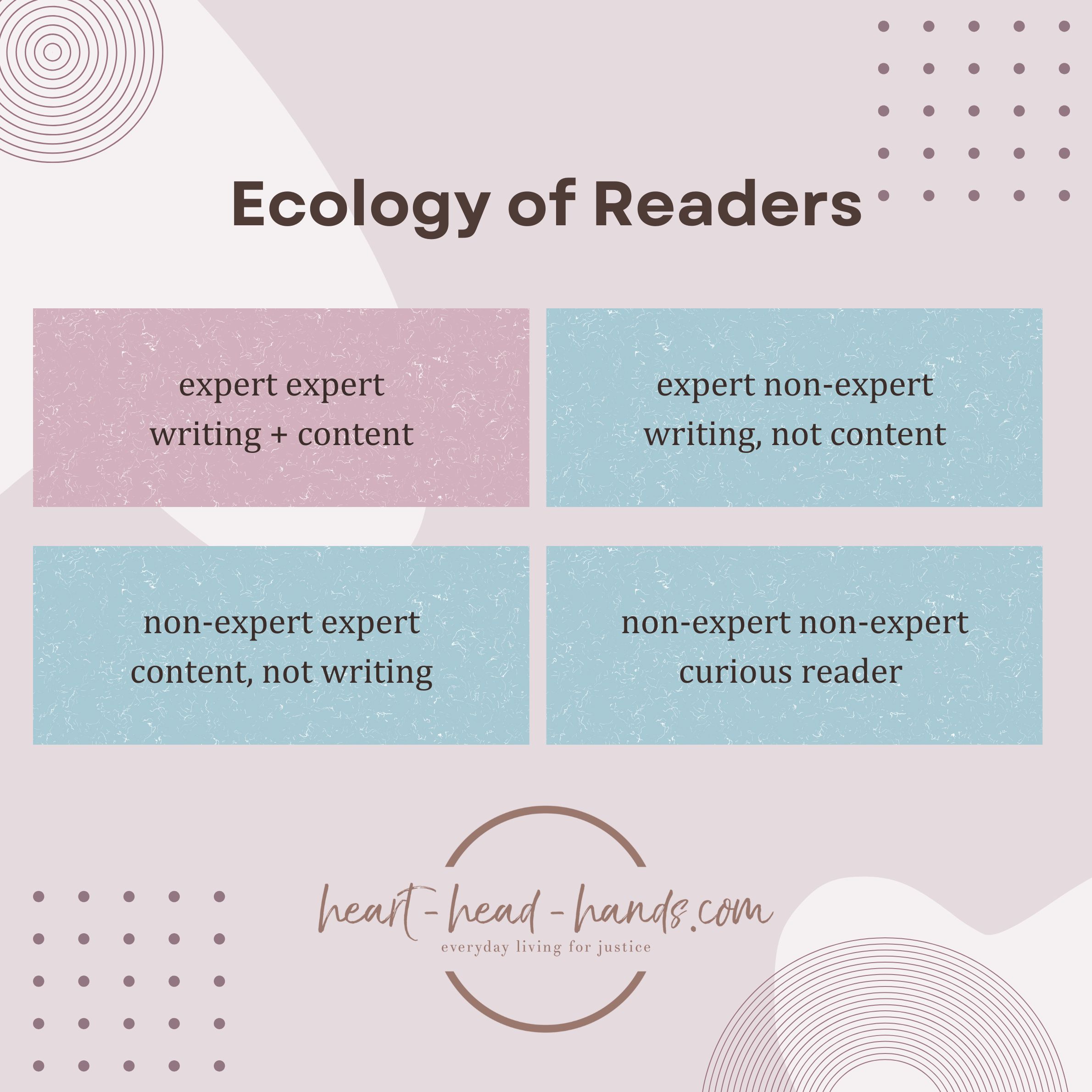
I learned to draw out this grid-style representation of an ecology of readers when working as the Assistant Director of Writing Across the Curriculum (WAC) at the University of Wisconsin-Madison. I want to thank the long-time and now-retired WAC and Writing Center Director Brad Hughes for teaching me this short-hand representation.
Now, so many years later, I continue to share this visualization because it disrupts the pull toward a single expert-expert reader, especially in academic spaces. It also names and gives equal visual space to nonexpert curious and committed readers—friends and family members who I find to be some of our most important, motivating, and inquiring readers.
In the recent writing support program with MD Anderson, the postdocs knew that multiple readers are needed, even when they didn’t have the language of “ecology of readers.” Specifically, several writers named that they need someone outside their lab, their institution, and their immediate context to ask for advice. One person asked for support with writing about a workplace conflict that they hadn’t shared with local colleagues, and another said that they want to build a writing coach relationship that could carry to their future institution (after their postdoc time). Each of these reflections remind me that ecologies of readers are needed not only for different types of feedback, but also because of workplace conditions, institutional contexts, and career trajectories.
A rich ecology of readers means there is always a direction to turn for advice. As writers, we aren’t restricted, but resourced. When one reader isn’t the right fit for a particular question, we ask another reader for input.
What Is the Role of a Writing Coach?
While coaching can take many forms, at its best it helps writers recognize what is possible for their writing. Writing coaches tailor feedback to the specific questions, goals, and projects participants choose to discuss. As readers, coaches study and can address a wide range of writing genres, including academic articles, book and grant proposals, reports, creative and public pieces, and professional correspondence. Coaches serve not only as ideas editors but also as readers of the rhetorical context. And coaches can teach how to ask others for feedback, counter invalidating writing advice, and offer support with building a fuller, richer ecology of readers.
Throughout the MD Anderson Writing Process Support program, several writers described what Candace and I offer as “academic therapy” and “writing therapy,” which also echoes writing studies research. Years ago, when interviewing writers and tutors for my dissertation research, I noticed that every writer interviewed (without exception) used this language of “therapy” or “counseling,” citing it as a key reason that writing tutoring/coaching allowed them to process so many different forms of harm and to keep going as writers.
As a type of reader, the coach may be more akin to the counselor—able to hold space for what’s often too scary to speak aloud or what needs time and trust before attending to. And when writers can be vulnerable and open up in coaching relationships, they can make sense of underlying assumptions or feedback that has previously been difficult to integrate or act on.
A primary goal of coaching, then, is to foster a life-giving ecology in which the writer’s life and writing projects thrive. Like alive ecologies in which many forms of flora and fauna support each other, writers need more than a single source of nourishment. Writers need multiple readers who understand them and their writing, in which there’s room for themselves and their writing to grow and change, season by season.
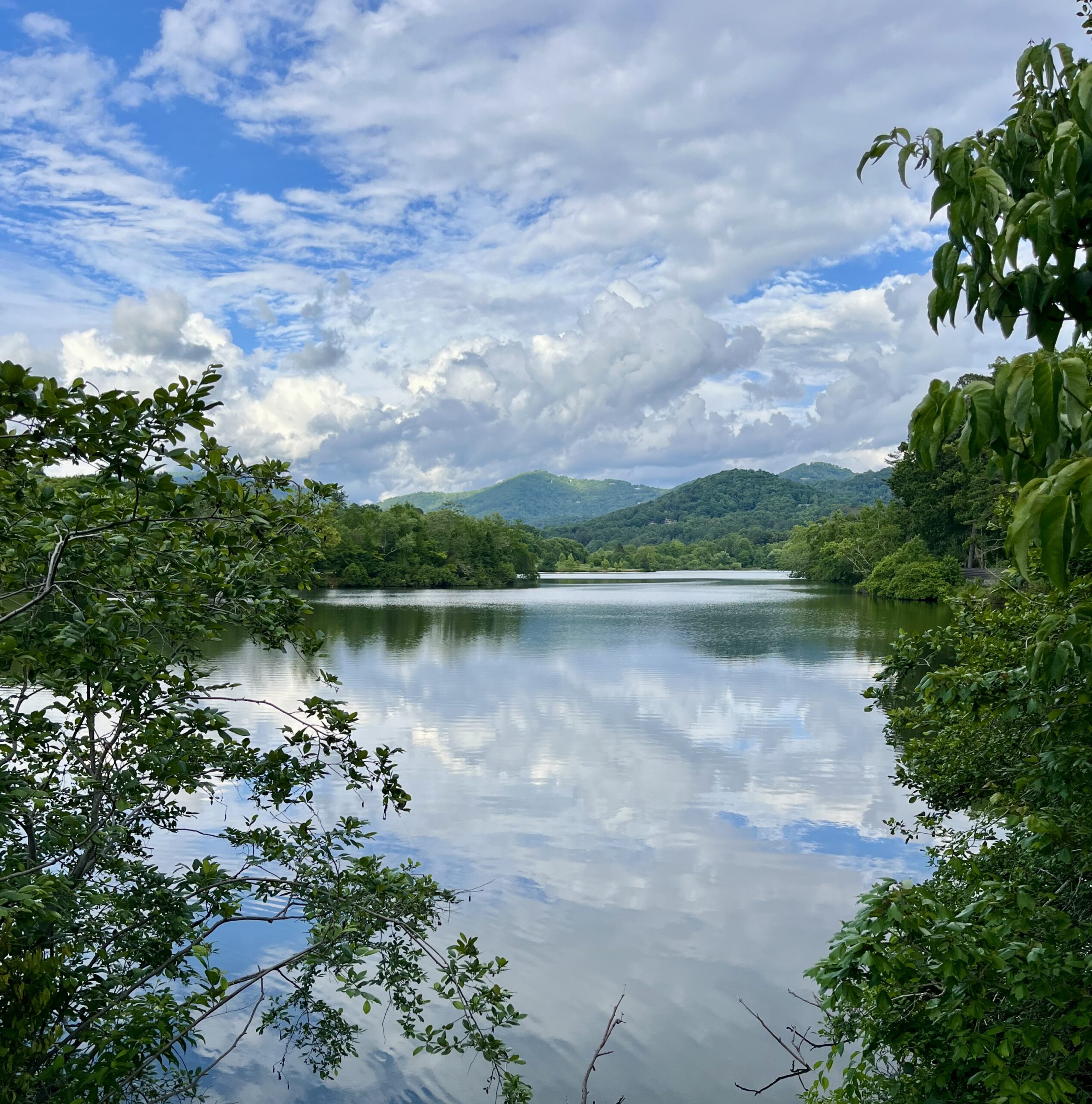
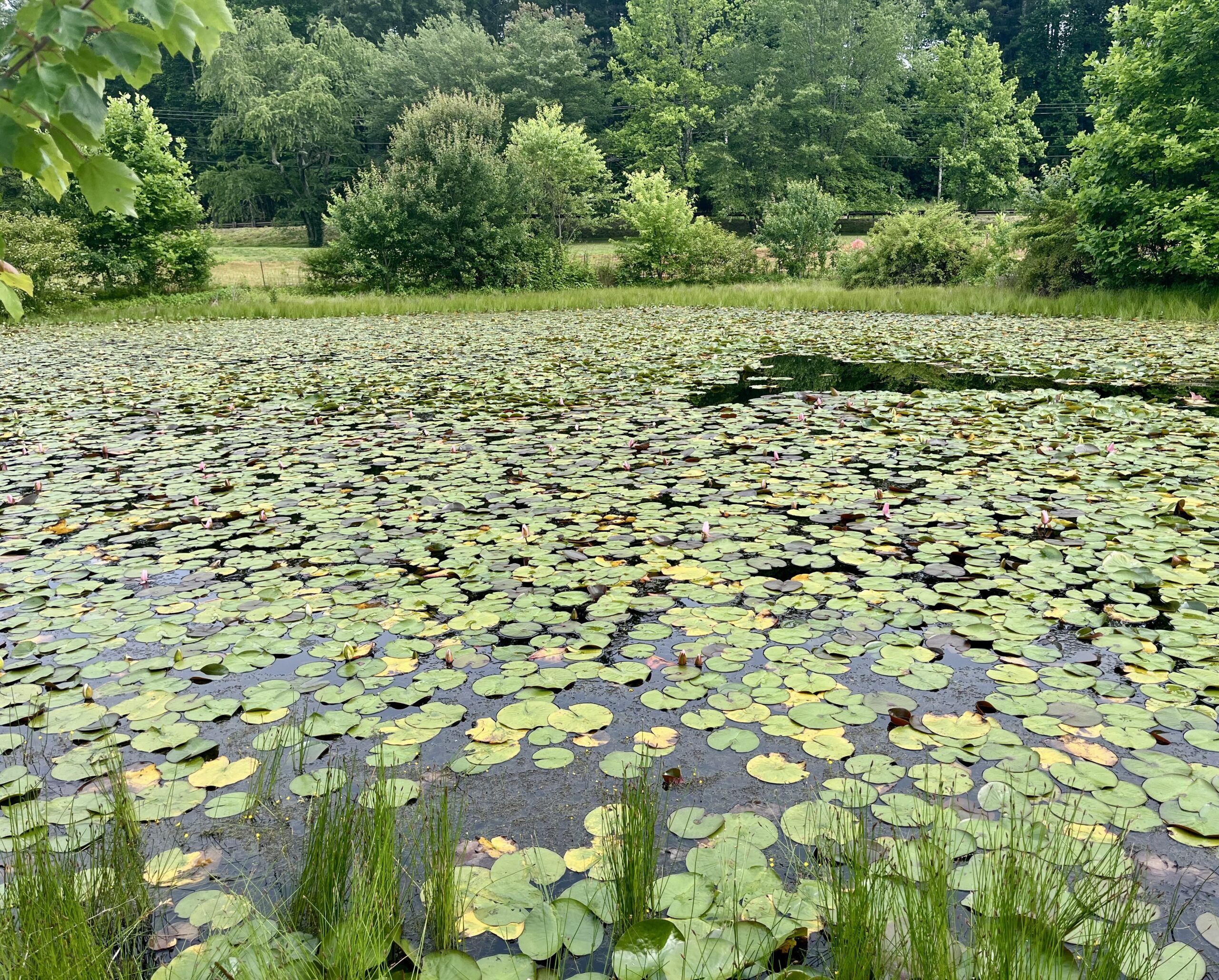
Truly, writers need readers, a full ecology of readers. Just as a lack of ecological biodiversity results in wide-reaching consequences, so does a lack of writing support impact writing lives in many ways. As writers, we can build ourselves back up and cultivate the writing lives we long for by building an ecology of readers. Here’s to building life-giving ecologies of readers!
—
This post is written by Beth Godbee, Ph.D. (she/her) for Heart-Head-Hands: Everyday Living for Justice. Subscribe to the email newsletter for regular updates, including for upcoming writing groups, retreats, and coaching.
Learn more about writing coaching and support through the related blog posts:
- “Writing Support for Your Campus? The Case of the UNT CLASS Write Program”
- “Writing Process Support: Supporting Postdoctoral Fellows as Writers”
- “Mentoring Writers Well? 3 Assumptions about Mentoring Writing”
- “How Mentors Can Support Writers and Counter Epistemic Injustice”
- “Sustaining a Writing Practice (And Even Building Momentum!) Throughout the School Year”
- “Recommitting and Reconnecting With Your Writing”
- “Coaching as a Way of Working with Fears”
- “Q&A with Candace Epps-Robertson, Ph.D.: Introducing Full Circle Writing, LLC”
- “Writing Retreats Are for All Sorts of Writing”
- “After Academia: Career Paths in Community Writing”
And I want to acknowledge again my incredible collaborator Candace Epps-Robertson, PhD. and thank Briana Mohan for the invitation to offer writing support for postdoctoral fellows at the University of Texas MD Anderson Cancer Center. Reach out if you’re interested in discussing customized writing support for your campus or organization.


Leave a Reply