
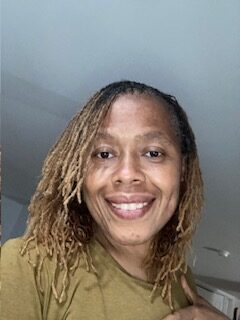
Pam Jones, Ph.D. is someone I want you to know. Pam is a compassionate, visionary, and infinitely wise voice in the world of education. Since we’ve been working together, I’ve learned so much about intergenerational literacies and imaginative world-building. Pam teaches and inspires me (and so many of us) and holds such hope for what’s possible in striving toward liberation and justice. And now, thankfully, she’s offering to hold space and work one-on-one, with small groups, and for schools and organizations. In the following interview, Pam describes her rooted commitments and everyday dispositions as well as the ways you can connect through coaching and tailored programming.
I met Pam a few years ago through the Heart-Head-Hands writing community (writing groups, retreats, and coaching), during a season when Pam was finishing her incredible dissertation titled Linguistic Pluralism in the African-American Family: Exploring Intergenerational Language and Literacy Practices. During this time, Pam continued supporting K-12 educators as a faculty member at the Bank Street College of Education, where she supervises fieldwork and offers a range of courses, including “Foundations of Modern Education,” “Language Acquisition and Learning in a Linguistically Diverse Society,” and “Collaboration and Differentiation in the Instruction of Children with Disabilities.” And while supporting prospective and current teachers, she’s also developed Educators’ Freedom Dreaming Collective, where she facilitates spaces of co-mentoring and asks what else could be, should be, and ought to be.
With Educators’ Freedom Dreaming Collective, Pam is inviting those of us who resonate with a vision of liberation to tap into co-creative world-building. Below, Pam describes what these words—educators, freedom, dreaming, and collective—mean to her. And she shares metaphors of kaleidoscopes and monsteras to describe living out a commitment to justice. Another of her favorite metaphors is that of the butterfly, which you’ll see across Educators’ Freedom Dreaming Collective. As Pam says of her offering: “When I think of freedom dreaming, I imagine a butterfly flying.” So, continue reading to see what butterflies, kaleidoscopes, and monsteras have to do with freedom dreaming.
Across contexts and in everyday life, Pam is someone who lives her truth really, really well. She foregrounds her work in Black feminist revolutionary praxis: an embodied, alive praxis that’s lived out in every interaction, in many small and BIG ways. I am excited about the many possible futures that Pam is holding for us, personally and politically. And I can’t recommend Pam or the Collective enough! I hope you’ll read Pam’s interview and then reach out to connect. There’s so much potential here and many ways to get involved—from subscribing for Pam’s updates to signing on to “study and struggle.”
Q&A with Pam Jones, Ph.D. — Meet Pam and the Educators’ Freedom Dreaming Collective
1. Tell us about yourself and what led you to create Educators’ Freedom Dreaming Collective.
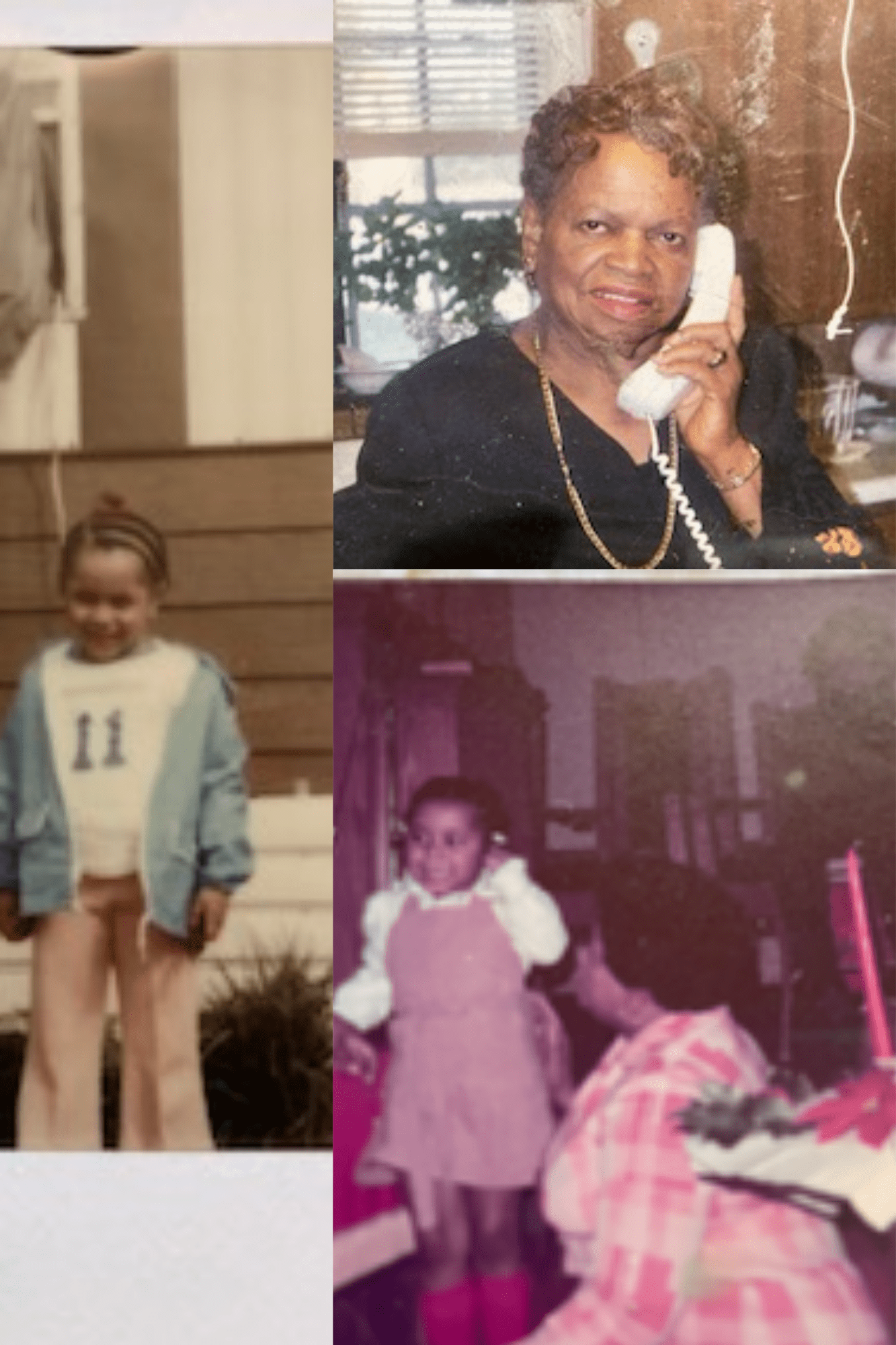
I could give the “standard” answer offered in the West (e.g., I am a scholar, educator, activist, researcher), which is true! However, there is so much more to the story! To be honest, when thinking about my answer to this question, my mind is flooded with images of myself from early childhood to now. I mention this because in hindsight, I realize I have been moving toward this moment since I was the age of four. Education as a way of living and engaging my fellow seres humanos (human beings) has always been at the core of my life. My mother, Josephine L. Jones, was amongst the most fierce advocates of education—especially education for historically marginalized populations. My mom planted seeds into my mind and spirit that she and others nurtured, much like horticulturists do with their flower beds.
In the early childhood years (and first grade, in particular), I fell in love with books and couldn’t imagine anything better than sitting in the stacks reading story after story. This love of reading (specifically) and learning (writ large) was interrupted by targeted racist attacks at the behest of select school officials. I want educators across the age-span to cultivate the knowledges, skills, and dispositions required to resist oppression and co-construct learning spaces filled with freedom and joy.
2. What is the Educators’ Freedom Dreaming Collective?
I LOVE this question! Let me explain why. I love this question because it incites me to reflect on why I am launching this space and its purpose. I’d venture to say that the Educators’ Freedom Dreaming Collective has been working its way into the world since I was in utero. Each word in the title holds special meaning.
“Educators” is perhaps the most accessible term in the lot, though it would still benefit from some unpacking. By “Educators,” I refer to those working in a teaching capacity with Pre-K through higher education populations of students. Educators hold a special role in the lives of students, especially those in school-age stages. How we show up—emotionally and mentally—impacts the classroom ecosystem. We must ask ourselves questions that compel us to be more introspective, to do what Dr. Yolanda Sealey-Ruiz calls the archaeology of the self. Are we actively unlearning oppressive ideologies and practices? Similarly, are we simultaneously learning more about human-centered and critical pedagogies and ways of being? And I will never forget Dr. Jamila Lyiscott’s words spoken at a conference in 2018: “If you are an educator who has never faced your (own) story, then you are destined to do this work irresponsibly.” I invite educators who are ready to do this work (in earnest) to join us in the Collective! Now, let’s tackle “Freedom Dreaming.”
“Freedom Dreaming” is the heart of this offering. While Dr. Kelley’s larger body of work is a constant inspiration, it is his work on Freedom Dreams: The Black Radical Imagination that offered the most instructive kernels of wisdom for my new offering. I consider it to be the terministic screen as well as the guiding light. Dr. Robin D.G. Kelley is the one whose voice and work I turn to (most often) for grounding in “freedom dreaming.” Dr. Kelley said, “Without new visions we don’t know what to build, only what to knock down. We not only end up confused, rudderless, and cynical, but we forget that making a revolution is not a series of clever maneuvers and tactics but a process that can and must transform us.” To me, this is the heart of freedom dreaming. Without the focus on and capacity to freedom dreams, we are in danger of getting lost in the weeds of reform or, even worse, to lose hope.
And finally, “Collective!” I truly cannot imagine any word other than “collective” to round out the name of our offering. In essence, “collective” chose me. It whispered to my soul and said, “It’s about the work we do together; it’s not about the individual over the community.” Concepts like “ubuntu” undergird my personal definition of the collective because, as ubuntu teaches us, “I am because we are.” As Mariame Kaba (2021) wrote in We Do This ‘Til We Free Us, “We can’t do anything alone that’s worth it. Everything that is worthwhile is done with other people” (p. 178).
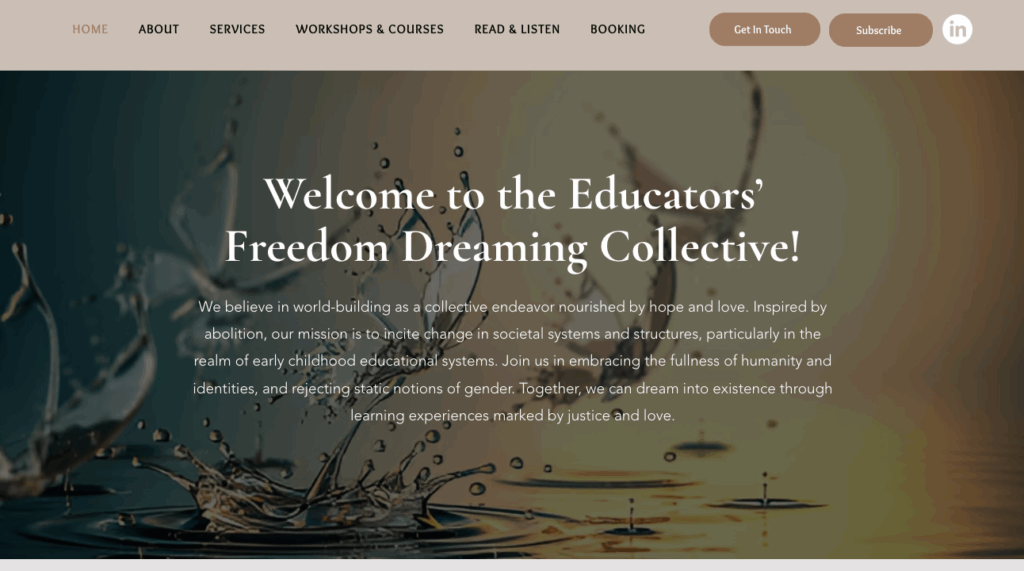
In sum, the Educators’ Freedom Dreaming Collective is a dynamic space where educators will come together to widen the aperture on what true justice in education looks like, sounds like, and feels like. We do this work together and engage in principled struggle to create more pathways into racial, class, gender, ability and other justices. Come join us!
3. I’m 100% sure people will want to be involved. How do we join the collective?
Beth, thanks for this question! The cool thing is the answer is multipronged. There is not only a single way to get involved with the Educators’ Freedom Dreaming Collective; there are many!
- Individual Educators: Are you an educator who would benefit from one-on-one coaching? Do you have questions and ideas you’d love to share with an experienced and like-minded social justice educator? Perhaps you’re wondering about how to launch restorative justice practices in your classroom. Maybe you’re wondering about translanguaging and how to adopt this stance and pedagogy? Do you need support with integrating and celebrating African American Language (AAL) into your teaching and lesson planning? If so, I am here to offer individual coaching to grow your knowledge, skills, and dispositions in any number of areas. All that’s required is completing a form that gives me an idea of what you’re looking for, and if I believe your goals match the mission and vision of the Collective, we’ll move forward!
- Small Groups: If a small group of educators is more your vibe, we’ve also got you covered! Personally, I love the energy generated in a small group of educators. The brainstorming and critical friendship can be nourishing and generative. For general interest in small group coaching, you can click on this link. This fall, the small group offering is taking the form of a study-and-struggle book collective! You can see the application form for this fall’s collective here to get a sense of what we will be offering in the spring of 2026. And because we are responsive to educators’ needs, topics shared by our community are options for small group coaching.
- Schools and Educational Organizations: More and more I’m asked the question, “Do you work with whole school communities?” The answer is, “Yes!” Is your school looking for semester-long or year-long coaching? Perhaps your school is in search of a mini-course tailored to the needs of the school community? Or maybe your school wants a 2-part professional development? Either way, we’re open to working with you! For general questions, reach out here. If your school is ready for coaching in the areas of critical language instruction, decolonized behavioral support, or other specific topics, complete this interest form. At the present time, we’re working with a school in the Northeastern region of the U.S. for the 2025-2026 school year to support their restorative justice programming.
We look forward to hearing from you and, hopefully, working with you in the near future!
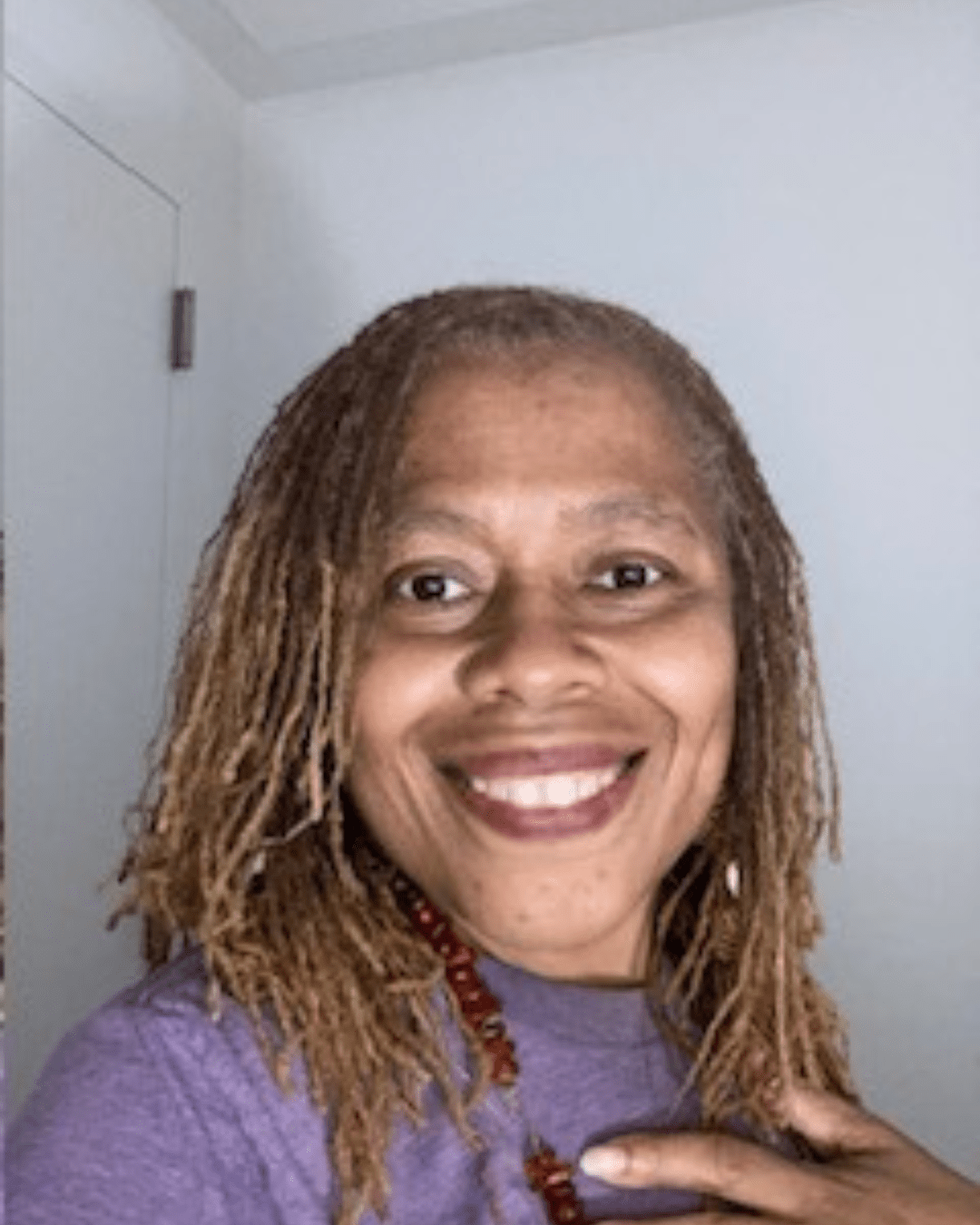
4. The Educators’ Freedom Dreaming Collective is an incredible example of striving toward justice—everyday, in relationship, for the long haul. How do you see this work aligned with living out commitments to justice?
Beth, your questions give me life! Since we’ve known each other for a few years now, you probably know how much I love analogies. For me, everyday living for justice looks like a kaleidoscope, but it also looks like a seedbed populated by a range of diverse plantlife.
As a young child, I was fascinated by kaleidoscopes because in the blink of an eye (almost literally), I would be transported to a landscape of colors and shapes moving in and out of relationship with one another. It felt like the colors and shapes were playing and creating magic. Sometimes, I needed to twist the dial in a different direction to land in a different place where more magic awaited me. While not as simple or the same as looking through the lens of the kaleidoscope, everyday living for justice requires a belief in the seemingly-impossible to keep striving for a society that is truly transformed. It takes a disposition willing to engage in wonderment while currently enmeshed within interlocking systems of oppression. I’ll give you an example that I am wrestling with on a consistent basis as I strive toward everyday living for justice.

As you know, we live in a racial capitalist society with deep imperialist and settler colonial roots. This is a lot to face on a daily basis! It can feel like a lost cause to fight against these larger-than-life systems, structures, and ideologies. It’s natural to feel like, “what can little old me do to fight this system?” Thankfully, the answer is a lot! We can resist, and righteous resistance is never for naught. In my personal daily life, I strive to divest my time and resources from people and formations whose aims are aligned with empire. This is hard and an ongoing endeavor, but it’s worth it. In my professional life as an educator, everyday living for justice means working in communities of critical friends, reading critical texts to grow my knowledge-base, and centering the lived experiences of the folx who have been the most marginalized historically on the basis of race, class, gender, nation, sexuality, and ability, full-stop. I schedule regular chats with close friends who I know will challenge my thinking and push me into more radical spaces (and by “radical,” I mean to the root).
Framed as a diverse seedbed, everyday living for justice means showing up as a relational and abolitionist-minded gardener. A diverse seedbed requires knowledge of the individual and the collective, knowledge of what they need to thrive. The incomparable Audre Lorde reminds us that “There is no such thing as a single-issue struggle because we do not live single-issue lives.” A true and enduring justice can only be achieved at the intersection of lived experience; an authentic justice is only possible if we are able to see the ways our struggles are connected. The injustices embedded within the soil of schooling in the U.S. are microcosms of the larger society. Carceral logics in schooling are a direct reflection of carceral logics in everyday U.S. society. The mutually-reinforcing systems of racism and ableism that we see playing out in the larger society are easily identifiable in schools with a special education system that is marked by disproportionality. Striving for justice in U.S. schooling looks like getting to know each of the students in our classrooms and their families. It means actively challenging policies designed to undermine the educational experiences of BIPOC children by centering their lived experiences via reimagined structures, ideologies, and pedagogies.
As you know, I can’t help but make plant analogies, so I’ll end (here) by saying that in some ways, everyday living for justice is akin to the moves of the beloved Monstera plant. I was pleasantly surprised to learn why Monstera plants look the way they do. I thought they evolved into their physical presentation: leaf-openings on the top and full leaves on the bottom. In my naivete, I said things like, “That’s so cute! I love the open leaves on the top and full leaves on the bottom.” (Please don’t judge me for my nascent plant knowledge, jajaja!). Once I began studying plants and plant life more, I learned the truth about the Monstera’s physical presentation and structure (dare I say, “morphology”): the Monstera evolved in this manner out of consideration for its collective self.

Monstera knew that the leaves sprouting on lower levels would need sun to thrive, and without openings in the top-level plants, leaves sprouting below the top would be deprived of the light necessary to thrive. To me, this is tantamount to a beautiful sacrifice an individual living being makes for the good of the community. Like the Monstera, living justice requires us to grow and move with others, considering others and transforming the betterment of the collective. Everyday living for justice means going ever deeper to gather the wisdom of the roots so that we can change the fruit that blooms in the future.
—
This interview is conducted by Beth Godbee, Ph.D. with Pam Jones, Ph.D. for Heart-Head-Hands.com. Follow Pam on LinkedIn for regular updates, and be sure to subscribe to her website updates. If potentially interested in working together, contact Pam here.


Leave a Reply